Tuesday, July 10, 2012

Life at HQ ISAF


Dusk at HQ ISAF after a sweltering day.  The Headquarters of the International Security Assistance Force is located in the heart of Kabul, in a fortified green zone also housing several embassies, and ornate, gilded Afghan houses occupied by ex-pats and wealthy Afghans.  The camp is quite small--the inner running loop is not even a kilometer—but, in the daytime,  home to over 2000 soldiers, civilians, diplomats and Afghan employees.  Not surprisingly, as this is a war, this is a 24/7 operation.  There’s always people around you where ever you go.  Folks here talk about, when they get home, how they love to wander around an empty house and luxuriate in the solitude.

Everything here is shades of grey and brown—the camouflage uniforms, the great blast walls surrounding you, the metal containers that contain offices and “hooches."  Everything except for the flapping of the bright flags of dozens of nations in the hot twilight wind.  Some Americans celebrate the 4th of July with a volleyball game in the floodlit court.  Officers from Belgium, France, Germany, the Netherlands, the US, Turkey, Romania and a myriad other nations.  There’s enough brass here to outfit every bar in Dublin.  The mountains of Kabul, with their sprawling square, mud-brick dwellings climbing up the sides, are visible over the twenty-foot blast walls, past the watchtowers and through the miles of coiled razor wire.

The view outside my base.

Rzaor wires, blast walls, check points: a reality for the citizens of Kabul.


The camp is dominated by the “yellow building,” which was previously the hub of a renowned military sports club.  Sports, like most everything else, were pretty much banned under the Taliban, and the building fell into disrepair.  When coalition forces seized it, it had been used basically as a toilet and cooking fires had been used in the middle of many of the rooms.

Headquarters, ISAF.


Nearby are the Destille Gardens, not much bigger than a large backyard, but a haven that is the envy of nearby bases.  Here you can rest in the gazebos or under the desert stunted trees and watch the fattest cats in Afghanistan in their comic attempts to snare the garrulous birds.  Many nights it hosts a special-event barbeque.  With all these countries present, national days roll by regularly.


Destille Gardens (aka Dusty Old Gardens) decked out for Canada Day.


My hooch is basically a metal container, probably about the size and appearance of a boxcar.  We have it pretty good at HQ, and there’s only two to a room, and I end up with about sixty square feet of personal space.  Bed, wardrobe, table, chair.  Online is the lifeline for many here, and we spend evenings viddying back home, or watching movies. The web is frustratingly slow and sketchy, but it’s there so we don’t complain.

A rare rainbow in Kabul.  Right over where I live too!


You really don’t complain about much here.  Its HQ.  If you want to moan about it, there’s always somebody to remind you of what it’s like in a combat outpost in Helmand province.  Or what life is like for the refugees swarming into the outskirts of Kabul.  We’re here for those soldiers and those people, not to get a tan.

The food here is, well, I guess what you’d expect when you get British multinational to provide sustenance to suit the culinary peccadilloes of 50-odd nations.  It provides the necessary nutrients to sustain life, let’s put it that way.  Yesterday they had hot dog soup.  There are a couple of other places to eat on base, a pizza joint and a burger joint, that, in the end, just make you miss pizzas and burgers back home.  Still, in comparison to the fare at the dining hall, it’s pretty good.  Or “Afghan good” as they like to say here.

The gym is another highlight, though.  They’ve got a court, a spinning room, a weight room and a treadmill room, and plenty of classes and activities to make it easy to stay in shape.  I was about 220 lbs when I got here and now I’m 195.

Alcohol is strictly verboten on base (except for the two we were allowed on Canada Day—Yay!), and fraternization with the opposite sex is not allowed.  After more than ten years , the bureaucracy of the military has had time to assert itself and the list of Do’s and Don’ts is lengthy and detailed, prompting one friend of mine—a veteran of many campaigns—to remark, “I remember when war used to be fun.”

The best thing about it is the people you meet, from all over the world, all cast into this remote, violent, backward place to deal with seemingly insurmountable problems.  Fighting the insurgents in six regional commands throughout the country and along the Pakistan border, training Afghan police and military (who have a nasty habit of occasionally turning their guns on you), dealing with a democracy imposed over top of a tribal feudal system we do not understand.  Logistics, intelligence, engineering, planning and operations in a hostile environment, thousands of miles from home and family.

These challenges forge a strong camaraderie, as strangers from strange lands like Texas, Sicily, Queensland, Manchester,  Dusseldorf , Kuala Lampur, the Faro Islands and Reykjavik become your family. Sure the bad guys are out to get us, but its amazing, even in the thick of it, how we can all have a good laugh.

The mosque outside the walls is calling the faithful to prayer now.

Four more weeks to go.

Monday, July 2, 2012

The Entrepreneurs of Kabul


Today I went on a tour of a number of recycling facilities in Kabul.  I'd heard rumours about Afghan capability to recycle various goods, and I wanted to see for myself what they could do, so when a local Afghan contact offered to take me out on the town, I jumped at the opportunity. 

Also, I'd been informed that trucks carrying sewage, ostensibly to the Kabul sewage treatment plant (STP), were in fact just dumping it in ditches.   I wanted to witness this as well, as well as determine if any of these trucks were being paid by us.  Our drivers are paid to deliver their load to the STP.

Easy right?  See if any of these trucks were illegally dumping and report back and hopefully get the problem fixed.  Sorted.  Move on.

Well, we did see some trucks dumping sewage in area next to the sewage treatment plant.  They got a little testy when we pulled up and took some pictures so, discretion being the better part of valour, we pulled out of there post haste.

But then we went around back to where the sewage treatment plant discharges, and it occurred to me that the treatment plant wasn't doing much good. 

The Kabul STP is an old Russian relic that had been originally designed to serve a very small area, but it now serves all of Kabul, currently numbering around four million inhabitants.  It simply cannot meet this capacity and subsequently it discharged what appeared to pretty much untreated sewage to a tributary directly upstream of the Kabul River.  (Click to enlarge.)

Near the discharge of the sewage treatment plant near the Kabul River.  This is basically untreated sewage.


The entire area stunk of raw sewage, and the river was covered in scum and was literally bubbling with toxins.  What's worse, is that the area is inhabited, and there are farms in the area that use the water as irrigation.  The elders told of children being sick and getting growths on their faces that sometimes lasted a year.  The locals would use the "water" to wash their harvest in, and would be on their knees in the muck all day doing their farming.  The river also floods in this area, and the people living here get their water from shallow wells.

Fields irrigtaed by, basically, raw sewage.  The burlap sacks is where they put the vegetables, to keep them from drying out during harvesting.


Women toiling in the fields.


But there's no money for a new treatment plant, and with the list of other pressing priorities—not the least of which is the security of the Afghan people, especially after the vast majority of coalition forces leave.  Meanwhile the problem becomes worse as war and economic refugees increase the burden on the city's scant infrastructure.

So what started off as a little problem soon became a large intractable mess.  This is typical of many problems in Afghanistan, as you attempt to address a small problem and realize that due to decades of war and poor governance....  There's no economy to fall back on.  There's little government to fall back on.  There's no infrastructure to fall back on.  They are on their own.  Eye Opener Number One of the day.

Then it was off to tour some scrap metal and plastic recycling facilities.  Again, this was a real eye-opener for me.  Not only do Afghans have the capability to recycle, but they do it with ruthless efficiency, and always have.  There is no waste here.  Opportunistic garbage dumps are first scoured by the poor for anything of value, and then the dogs have a go at them, and lastly the goats come in to eat anything organic that's left.

The plants themselves tend to be labour-intensive.  For several workers, their job is to take incoming plastic and hack it up with knives, before it goes into the machine to be shredded.  

My job is to hack up the bucket and put it in the machine.


At the scrap metal plant, about a dozen workers pulled a red hot bar from a furnace and passed it through a number of rollers to turn it into rebar (those steel rods used to reinforce concrete).  They all shook hands with me and I noticed a few of them were missing fingers.

Pulling the superheated steel from the furance.  By the way it's 36 deg C outside.

Rolling the red-hot cast metal into rebar.  

As is the Afghan way, we stopped for tea many times and I got to hear from the entrepreneurs running the various factories.  It's not often they see a white guy out and about.  They talked about the international organizations like ISAF (which is essentially NATO plus about 15 other nations operating as the coalition forces in Afghanistan) and the UN and others, holed up in their fortresses, and occasionally zooming about from Point A to Point B, with little real interaction with the Afghan people.  But for all that, they worry about what will happen when the coalition and US forces leave.  They talked about the difficulties running a business in Afghanistan.

One owner told me that he dresses like his workers, and drives a beat-up old car.  (Afghanistan is the Toyota graveyard of the world; about 90% of the vehicles here are old Toyota Camrys and Corollas).  It simply doesn't do to show signs of wealth here, because then you become a target for kidnappers, warlords and corrupt officials.

The final place I visited was a fabrication plant.  Here, the owner had all his workers in hard hats and gloves, with welding glasses.  Workers had to strap themselves in if they were working at height, and there were even labeled first aid stations.

These people have managed to create thriving businesses under daunting circumstances. "We appreciate the efforts of our international friends, said one fellow with an only slightly cynical smile, "But all Afghans know we must do this ourselves."

All in all, a very eye-opening day. I would despair trying to wrap my head around how severe and intractable their challenges here are,  but heartened by the entrepreneurial spirit, resilience, candor and hospitality of the Afghan people.

As my tour guide told me, dropping me off after a long day in the desert sun:

Qatra qatra darya mesha.  A river is made drop by drop.

Wednesday, June 27, 2012

The Bureaucracy's Management Fetish

There was an interesting piece in the Toronto Star (The Treasury Board’s inefficient mission for efficiency, June 25, 2012) concerning a recent Treasury Board Secretariat (TBS) initiative to spur innovation in the civil service of Canada.  The article points out how an exercise to achieve greater efficiency in the civil service became hopelessly inefficient. 

The TBS basically oversees all of the bureaucracy of Canada; the civil service of the civil service if you will.  The Canadian public service includes about 200 departments, agencies and crown corporations comprising about 283,000 bureaucrats (about 0.83% of the population).  It's the biggest organization in the country.

This particular initiative involved offering civil servants cash-money if they could come up with innovative ideas that would save the government money.  It looked god on paper.  Anyone, in theory, could float an idea.  If the idea didn't result in policy changes and if it saved more money than the actual award, a worker bee in the hive could walk off with $10,000.

I've worked in large bureaucracies most of my career.  And of course, since I basically inhabit the philososphere, I spend a lot of time thinking about how they operate. Here in Afghanistan I have occasion to study the most advanced form of this particular phylum: the multi-national military environment.

As an environmental scientist, I've likened the bureaucracy to essentially a kind of ecosystem, filled with creatures that have adapted over time to survive and thrive in this unnatural environment.

The bureaucrat in his natural habitat.

In a true ecosystem, innovation and competition are the engines of survival.  But, of course, the civil service, being the government, has no one to compete against, and no clear bottom line against which to measure its success.  In theory, success should be measured by the satisfaction of the people of Canada.  In practice, since it is ostensibly run by politicians, it's also about getting the ruling party reelected.

It’s a very centrally-controlled, hierarchical structure.  Information flows very well from the top down, but not so well from the bottom up.  Now, we've known since the days of Adam Smith's The Wealth Of Nations that a centrally controlled economy is much more inefficient than a distributed economy where individual agents act in their own interest—enlightened self-interest is the term Smith used.  It seems intuitive to me that the same would apply to an organization.

The mandarins of the civil service are concerned with consistency and control, retaining decision-making ability at the top.  To my mind, you can't have that and expect an innovative workforce.  Innovation is grown, not imposed.  It arises from individuals coming up with a new idea so that they can do their job more efficiently or effectively, and that idea catching on with others.  In nature, most innovations—normally manifesting as genetic mutations—don't work.  Now and then, however, you get one that increases the fitness of an individual making it more likely to survive and procreate, passing on the innovation to the next generation.

I'm not blaming the mandarins or the politicians.  I firmly believe that Canada, being a democracy, gets exactly the civil service it deserves.  As implied above, innovative ideas often fail.  The media, being the media, don't report on successful civil service innovations, or successful anything for that matter.  

(The media report bad news, not good news.  Perhaps the same reason Shakespeare's tragedies are considered more important than his comedies.  Why?  Some aspect of human nature. Perhaps it's a built-in efficiency of our minds.  Why waste precious conscious thought on what's going right; it's what's going wrong that you, from a survival standpoint, needs to know.)

Sorry—drifted off there.  Anyway the media will be all over the screw-ups like a pack of starving chihuahuas on a pork chop.  And since politicians who get bad press tend not to get re-elected, you end up with a pathologically risk-averse organization.

The folly of those on top, I think, is having the hubris to think that they can change this.

I've always been impressed with the caliber of people who rise to the top of bureaucracies.  I've found the General Officers here in Afghanistan to be competent and sharp.  The government bureaucracy I worked for in Canada, similarly, seemed to me to have very able and hard-working people in the higher echelons.

But the system they presume to run is not dead.  To continue my ecosystem analogy, it is very much alive.  Look at the common etymology of the words "organization" and "organism." The senior managers may be the conscious brain of this organism, but they overestimate the importance of the conscious brain.  Even in a human, with the most advanced brain function in the animal kingdom, the conscious mind is far more limited than we assume.

We can't tell our heart to stop beating, our lungs to stop breathing.  We can't turn off our fear of heights or love of strawberries.  Even to stop a habit like drumming your fingers when your bored takes a supreme and sustained effort.  You can decide not to act gay, perhaps, but you cannot decide not to be gay.  The base motivations that drive us bubble up from some primordial id that we do not understand.  Many of the decisions we think we make, we don’t actually make, or, put another way, we can do what we will, but we cannot will what we will.

In other words, the brain of the human organism or the civil service organization does not control in the manner we commonly think it does—rationally collecting, processing and analyzing information.  What's more, the human organism's sensors relay accurate information to your brain, for the most part.  Imagine if your eyes only transmitted information it thought your brain wanted to see.  This is frequently what happens in large organizations.

It is, in fact, very difficult to change who you are in any fundamental way, and similarly it is very difficult to change what the civil service is. 

In the government, for example, Human Resources reform has been a perennial fixture in attempts to transform the bureaucracy.  It's takes too long to hire people.  It's difficult to fire people.  Annual evaluations are a resource-intensive paper exercise.  The thicket of rules, regulations and policies is stultifying.  And yet, despite these bright and determined people at the top, and despite their stated desire to make HR more effective and responsive, HR remains essentially the same beast it was in the 60s when it was called Personnel. 


And all the management models of the past forty years—Quality Management, Learning Organization, Results Measurement, Change Management—hang like hunting trophies in the corridors of the TBS, and yet the civil service is essentially the same animal it has been for decades, heck centuries (the word Byzantine, meaning unnecessarily complicated, comes from the royal court of Byzantium).

The reason the civil service is the same as it always has been is because it is adapted to its environment, and, because it is adapted, it resists change.  The reaction to this resistance is for the "brain" of the organization to introduce more neurons (managers).  They’ve made a fetish out of management: time management, people management, project management, crisis management, process management, information management.  The resulting level of control at the worker bee level is simply not conducive to innovative thinking. To quote T.H. White, "Everything not forbidden is compulsory."

So what's the answer?  Who knows.  I'm great at pointing out problems; not so hot about doing anything about them.  Maybe I'll introduce a new fad called Organic Management and make millions.  Treat your company like a garden.  Like Chauncey Gardner said in the 1979 classic film Being There.


P.S. Rats!  Just did quick Google and there's already whole slew of "Organic Management" websites.  So much for that get-rich-quick scheme,

Saturday, June 23, 2012

The Is: The SImulated Universe


OK, back to the war and that means back to the blog. 

In our last  few chats we've been discussing the idea of parallel universes.  First of all we considered if the universe we inhabit is infinite.  If it is, then the particular collection of atoms in our solar system must be exactly recreated elsewhere, if you just travel far enough.  On average, if you walk about a googolplex steps, you'll find another identical solar system with another you sitting there reading this blog (except for the fact that, being identical to you, he also took off to see what his doppleganger was up to in another part of the infinite universe).

We talked about string theory briefly, and how our mathematical laws and constants are, according to string theory, based on the topology multi-dimensional strings and branes, and that those topologies allow for, at present, the possibility of around 10500 (that's a one with 500 zeroes after it) different kinds of universes with physical laws that may differ radically from what we know.

We talked about the quantum multiverse.   Evidence shows that subatomic particles tend to exist as probability waves and when they are observed, all the other probabilities collapse except for the thing that actually happens. But what if each of those probabilities doesn’t collapse?  What if, upon observation, each possibility realizes itself in a parallel universe, and thus billions of new universes are being created each nanosecond for every single possible outcome of a quantum event.

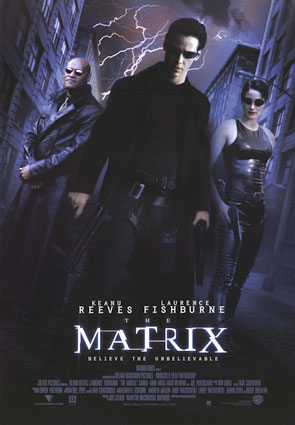
The last type of parallel universe we will discuss is the simulated universe.   If you are in tune to pop culture at all, you already know what this is:

Sorry, which pill was which again?


One of the largest supercomputers in the world, Blue Gene, is presently doing a passable job of effectively simulating a tiny portion of a rat's brain, about the size of a pinhead.  It's modeling about 10,000 neurons comprising some 10 million neural connections.  Big deal,  say you?

Why sure, it's a far cry form the 100 billion or so neurons we have in our head, comprising trillions of neural connections and operating at about 100 trillion operations per second.  But when you take into account the astounding progress in computing ability, the project's leader, neuroscientist Henry Markram, figures that we'll be effectively modeling a human brain by about 2023.

Let's keep moving.  Let's say that we get a handle on quantum computing in the next few decades or so.  An effective quantum-based computer the size of a laptop could not only model a human brain, it could model every thought of every human ever in a fraction of a second.  So computing power isn't really an issue, barring a zombie apocalypse.

 If you've got a machine that can effectively model a human brain, shouldn't you be able to simulate people?  Well, now we're out of the cut-and-dried world of circuits and into the more ethereal realm of epistemology.  Would your simulation think and feel the same way you do,?  Would it be self-aware?  Or is their some ineffable quality to consciousness that lies beyond the ken of mere computation?

This an active and interesting area of research in epistemology, and one perhaps we'll discuss in a later Mindfingers post.  But let's say for the time being that, for the purposes of any human interrogation, we cannot differentiate between you and your simulation.  That is, if we put each of you in a locked room and asked questions by slipping pieces of paper under the door, there is nothing we could ask that would allow us to tell you apart from your simulation (known as the Turing Test for artificial intelligence).

So now we have human mind simulations that you can't tell from the real thing.  After that it would be child's play to simulate a physical universe for these minds to live in, with stars in the heavens and gravity and clouds and viruses.  In essence, you've created a parallel universe.  Unless you decide to tell the simulated beings in your model that you are there, they would more or less be in the same situation we're in--looking around and wondering what they are doing there.  This seems much easier than creating an actual parallel universe, and the forces involved with that.

If we could create one of these simulated universes, there is nothing to stop us from creating several.  We could play with them and try out different things.  Perhaps, in the future, we could even find a way to live in them ourselves.  And we might have at some point millions of these simulated universes.  A few on every laptop.

So here's the thing.  In the vastness of The Is (my name, recall, for the multiverse), do we honestly think that we are the first life form ever to become this technologically advanced?  Indeed, it would seem likely to the point of almost certainty that civilizations elsewhere had or have reached our level of technology and beyond.  And if that's the case, they've already discovered this idea of simulated universes too.  Perhaps millions of intelligences elsewhere in The Is have already created simulated universes..

Not only that, but these simulated universes, being more or less perfect-fidelity copies of the real ones, could have simulated inhabitants that themselves create simulated universes with simulated inhabitants, who may in turn create their simulated universes.  In this scenario you end up with simulated universes vastly outnumbering "real" ones.


Following that thread of logic, if simulated universes are far more probable than real ones, then it follows that it is far more probable that we ourselves are living in a simulated universe than a "real" one.

In the immortal word of Keanu Reeves: Whoa!

So with our potentially infinite universe, parallel universes from other Big Bangs, alternate universes possible in string theory, the Many Worlds Interpretation of Quantum Mechanics and simulated universes, we have a vast multiverse beyond our furthest imagining.  Infinities upon infinities of universes.

There is only one step left.  What if the multiverse simply comprises everything.   There is nothing that isn't. No matter how far-fetched your imagining, it is out there right now.  Harry Potter living on Privet Drive.  A universe composed of nothing; not empty, but nothing.  A universe where pi = 4.  A universe like ours, but running backwards.  An entire multiverse ruled by a omniscient, omnipotent God. 

The Is.

If you're interested in this kind of stuff, I highly recommend Brian Greene's book The Hidden Reality.

Tuesday, May 8, 2012

The Is: The Many Worlds Interpretation of Quantum Physics


This series of posts is based on Brian Greene's The Hidden Reality, and I highly recommend buying it if you are interested in exploring the subject further.

Quantum physics came about at a time when people were wondering if they had reached the End of Science at the end of the 1800s.  Newton's concept of gravity had ideally described motion for hundreds of years.  Maxwell and others developed Maxwell's Equations which seemed to completely explain the nature of light and electromagnetism.  All was good with the world.  Lord Kelvin's indicates the general notion at the time:
"There is nothing new to be discovered in physics now. All that remains is more and more precise measurement" - Lord Kelvin, 1900
Little did they know that an obscure worker at the Swiss patent office, Albert Einstein, was spending his evenings developing his Special Theory of Relativity which would be published in 1905.  That would lead to a tectonic shift in the way all of us perceive the universe, would meld space and time, and would climax with two giant mushroom clouds over Japan in 1945.  But we're here to talk about another breakthrough round about the same time.

Quantum physics all came about because someone wondered why things glowed red hot.  Or more particularly why things glowed a certain colour based on their temperature regardless of the material.  Classical physics was having a hard time explaining this until a fellow named Max Planck offered that you could get the math to work if you made it so that electromagnetic could only be emitted in multiples of a certain of a certain package size, called a "quantum."  Electromagnetism, at small scales, was not continuous, but discrete, made up of bits, like a digital computer.

Well, like any good physicist, Planck and other physics luminaries kept going, and it was one of those extremely satisfying moments like when you get your fingers under a corner of wallpaper and a whole huge swath of it rips up in one piece.  Several groundbreaking findings followed that laid the basis for quantum physics.

Heisenberg's Uncertainty Principle showed that you couldn't know both the position and the velocity of a particle exactly.  You could know exactly where it was, but nothing about its velocity, or vice versa.  But not both.  Not just because they didn't have machines sophisticated enough to measure them, but because, at the tiny subatomic scale, reality itself became smeared.  At this scale, an electron or a photon could not be thought of as a particle or a wave, but a particle and a wave.

Erwin Shrodinger developed an equation to predict the probable location of subatomic particles.  Again, because of Heisenberg's Uncertainty Principle and the mathematics involved, you never knew exactly where the little buggers were hiding, but with Shrodinger's equation you could say "I'll lay two to one odds the electron is over there" and come out a winner at the end of the night.


So in twenty years they went from the End of Science to black holes, the gravity-warped space-time continuum and the idea that the stuff of nature, at the subatomic substrate doesn’t really exist per se, but just kind of exists.  This is what caused Reginald Bottomsley III  to remark, at the 1927 World Physics Conference, "What f%@kery is this?"  OK, I made that last part up.  But they were all thinking it.

But was this "probability wave" of Shrodinger's real or just a mathematically convenient description of what was happening?  The famous double-slit experiments of the 1920s showed that the electrons behaved, in reality, like both particles and probability waves.  If you're interested in the double-slit experiment, here's  a good little youtube video on it.


Now if your head is spinning, don't worry.  That's pretty much everyone's reaction upon exposure to the double-slit experiment.  An electron exists as a probability wave, harbouring within in it every possible future.  But when you point a machine to look, an electron jumps out at you singing Here I am / The one that you love.  It's only a probability wave when you're not looking,  but when you look at it, it becomes a particle at a point in space.  Like little children, the electrons behave completely different when people are watching.  What the heck is that all about?

View of electrons through microscope.  Note the remarkable similarity to 80s cheezerock band Air Supply.

 Well all the eggheads got together, led by Neils Bohr, the father of quantum physics, and came out with something called the Copenhagen Interpretation.  The Copenhagen Interpretation of quantum physics is that matter and energy exist as probability waves until such time as we decide to take a peek at what is going on.  It is this act of observation itself that causes the collapse of the probability wave, forcing one probability to actually happen (P=100%) and all the others to not happen (P=0%).

This remains, probably, the most popular interpretation, but it has some problems.  Why, for example, should an electron care if someone is watching it?  What does "observation" mean?  Does a sentient being need to be involved?  Will an electron show up singing the Greatest Hits of Air Supply if the measuring machine is on but the grad student whose supposed to be watching it is playing Second Life? Who or what chooses which probability actually happens?  And then there's the niggling detail that Shrodinger's Equation doesn't really allow for a sudden collapse like that.

So another interpretation of quantum mechanics was proposed. In this one, the probabilities of the events that didn't happen didn't collapse to zero.  All possible events happened, each in a co-existing universe.  The universe splits for each outcome.  A different parallel universe is created for each possibility.  To use a not-completely-accurate "macro" analogy, when you roll a pair of dice, eleven universes are created, one for each outcome.  We are part of a vast, complex probability wave function containing every possible future of every subatomic event within it.  Anything that ever could have happened did happen—not necessarily in the universe we experience but in other, parallel, universes that are being instantiated by the trillions every microsecond from all the probability waves of the subatomic particles in our universe.

This is the Many Worlds Interpretation of quantum physics.  It's got it's issues too, but it's preferred by many of the great minds of quantum physics, not the least of whom is Stephen Hawking.  Many Worlds or the Copenhagen Interpretation?   It's somewhat of an academic question right now.  Since the various probability waves decohere, it doesn't seem that we can actually communicate with any of these parallel universes.  And no one has thought of a way to feasibly test the Many Worlds Interpretation (though there are some ideas).

But like the infinite universe and the bubble universes of the last column, the Many Worlds Interpretation is completely mathematically consistent.

So now we've got The Is containing, potentially, an infinite number of infinite universes and a parallel universe for every possibility of every subatomic event that ever happened or ever will happen in all those universes.  But we're not done yet.

Next up:  Simulated Universes.

Friday, May 4, 2012

The Is: Parallel Worlds, Infinity and the Cosmic Chicken

Living in the philososphere, as I do, is a bit of a curse sometimes.  You get yelled at because you were thinking about what's outside the universe, or whether an omniscient god and free will are logically incompatible.  You live inside your own head too much. You miss what's going on around you.  This is why my last words are likely to be "What bus?"

I spend far too much time wondering where the universe ends and where time began.  As far as bad habits go, it could be worse, I suppose.   I recently finished a fascinating book called The Hidden Reality by Brian Greene, Professor of Physics and Mathematics at Columbia University.  Great read.

Our observable universe is a sphere of about 93 billion light years in diameter.  Although the universe itself is only about 14 billion years old.  Odd:  if the speed is light is the universe's speed limit, how could the universe gotten bigger than the distance light will have travelled since the Big Bang—13.75 billion light years?
The Observable Universe.  The Virgo Supercluster, of which our galaxy is a part, is too small to be seen here.  However if you look carefully, you can spot spot my ego.
The answer, at least in current cosmology, is that the Big Bang didn't happen in space.  It created space.  And time.  And the speed of light is the fastest thing in space, but that limit doesn't apply to the expansion of space itself, for which we know no limit.  Right after the big bang, it is surmised that space itself expanded quite quickly.  Like from the size of a mote of dust to the size of the observable universe in far, far less than a billionth of a second. 

Timeline of the universe including early inflaton field expansion.  Or a funny looking bullhorn.
That allows for a pretty big universe outside of what we can see if it.  Actually the universe could well be infinite.  Anything outside that 93 billion light year sphere is not known and cannot be known by us.  But if it is infinite, that means that there must be other solar systems identical to ours out there.  After all, in a finite volume of space (say the solar system) there are only a finite number of ways that atoms can be configured.  If the universe is infinite, you are bound to come across an identical arrangement sooner or later.  Professor Greene even does the math.

A googol (not the search engine) is a very large number.  It's 10100, or a 1 with a hundred 0s after it:

10,000,000,000,000,000,000,000,000,000,000,000,000,000,000,000,000,000,000,000,000,000,000,000,000,000,000,000

It's a pretty big number, far greater  than the number of grams in the observable universe (about 1056) and around a trillion times bigger than the number of photons in the known universe (1088).  

Graphic representation of the concept of a googol.

Also, my son's number is going to be a googol when he plays for the Canucks. Take that, Gretzky. 

Well, I stole their graphic, I should at least plug the product.  You can buy this  American Apparel.
A googolplex is the largest number with a name.  It's ten to the power of a googol (10googol or 1010100).  I wrote googol out above, but if I were to write out the zeros after googolplex in a similar manner, the known universe would likely come to an end far before I got a decent start on it.  Even if I got the fastest computer in the world to do it for me.

Anyways, Dr. Greene has come up with the first practical application of that number that I've seen.  You'd have to walk about a googolplex steps, on average, to reach another system just like ours, with an Earth upon whom resides another you reading this exact same sentence right now.  As a matter of fact, if the universe is infinite, there's an infinite amount of such identical Earths.  And your Other Yous are all right now thinking of each other.

And even if your lottery ticket doesn’t pan out next week, you can take solace in the fact that there are an infinite number of Other Yous in the infinite universe who will be multi-millionaires next week. Isn't infinity fun?

A philosophical questions arises:  if the universe is infinite, does that mean everything is?  Well, no, not if you're talking about our universe. Our universe is bound all over (from what we know) by the same fundamental laws.  Every electron has a mass of 9.109 382... x  10-31 kg no matter where you are.  Everywhere in the infinite universe the value of universal gravitational constant, the cosmological constant, and the speed of light in vacuum are the same. So anything that is physically possible within the bounds of these universal laws exists in an infinite universe, but anything that breaks those laws cannot. 

But that's OK, we've got a work-around.

The inflaton field theory, shown in the bullhorn diagram above, states that inflaton particles expanded the space of our universe early on until the inflatons wore themselves out allowing an environment where subatomic particles, and then atoms, and molecules and stars and planets and us could happen.  But in an interpretation of that theory, the inflaton expansion—that is space expanding and trillions upon trillions faster than the speed of light—is still ongoing.  Now and then, in areas, the inflaton fields diminish allowing the precipitation of normal matter creating bubble universes in the inflaton field.  This is the Swiss Cheese model of the universe--the cheese part being the quickly expanding inflationary field and the holes in the cheese being bubble universes.

These universes may well differ than ours. They may not be held to the same basic physical laws. Protons may be a little lighter.  Pi might be equal to 3 instead of 3.1414... In 11-dimensional string theory, our space consists of 3 spatial dimensions and one time dimension.  The other dimensions are all wrapped up at the subatomic level, like a seed that never sprouted.  But other universes could have different dimensions than the four space-time dimensions we perceive.  Or it could have five, six or seven dimensions.  I string theory there are some 10500 dimensional configurations for universes currently.

Due to kind of Einsteinian judo flip where space and time change place, these bubble universes, while being finite when viewed from the cheesy part of the Swiss Cheese model (the inflaton field) are infinite when viewed from the inside the bubble.

So now you potentially have an infinite number of infinite universes, including an infinite amount with fundamental properties different than our own.  But still governed, overall, by the fundamental mathematics of the inflaton field itself. 

Entering an entirely speculative realm, you could kick it up one more notch still and hypothesize that our big bang that created this Swiss Cheese multiverse was just one of many--say one of an infinite number of big bangs with infinite variety--all caused by some other primordial first cause.  If the Big Bang is the Cosmic Egg, then this would be the Cosmic Chicken laying an infinite number of eggs.  

Hubble Telescope view of Cosmic Chicken.

This leads to an infinite number of multiverses containing infinite numbers of infinite universes.  And you could kick it up another notch saying that there are an infinite number of Cosmic Chickens.  As a matter of fact, you could kick it up an infinite number of notches.

Anyway, if you notice while talking to me one time that I seem to be spaced out, that's probably what I'm thinking about.

Postscript: this term "multiverse," meaning this universes and all the other potential universes out there I find rather awkward and less than inspiring.  I'm going to rename the multiverse The Is, simply because anything that isn't in the multiverse Isn't.