Saturday, June 23, 2012

The Is: The SImulated Universe


OK, back to the war and that means back to the blog. 

In our last  few chats we've been discussing the idea of parallel universes.  First of all we considered if the universe we inhabit is infinite.  If it is, then the particular collection of atoms in our solar system must be exactly recreated elsewhere, if you just travel far enough.  On average, if you walk about a googolplex steps, you'll find another identical solar system with another you sitting there reading this blog (except for the fact that, being identical to you, he also took off to see what his doppleganger was up to in another part of the infinite universe).

We talked about string theory briefly, and how our mathematical laws and constants are, according to string theory, based on the topology multi-dimensional strings and branes, and that those topologies allow for, at present, the possibility of around 10500 (that's a one with 500 zeroes after it) different kinds of universes with physical laws that may differ radically from what we know.

We talked about the quantum multiverse.   Evidence shows that subatomic particles tend to exist as probability waves and when they are observed, all the other probabilities collapse except for the thing that actually happens. But what if each of those probabilities doesn’t collapse?  What if, upon observation, each possibility realizes itself in a parallel universe, and thus billions of new universes are being created each nanosecond for every single possible outcome of a quantum event.

The last type of parallel universe we will discuss is the simulated universe.   If you are in tune to pop culture at all, you already know what this is:
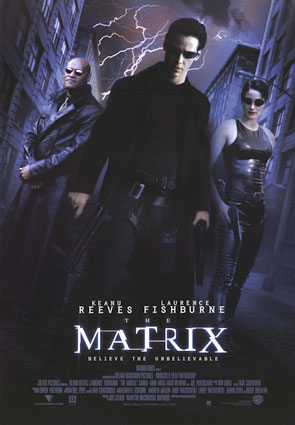
Sorry, which pill was which again?


One of the largest supercomputers in the world, Blue Gene, is presently doing a passable job of effectively simulating a tiny portion of a rat's brain, about the size of a pinhead.  It's modeling about 10,000 neurons comprising some 10 million neural connections.  Big deal,  say you?

Why sure, it's a far cry form the 100 billion or so neurons we have in our head, comprising trillions of neural connections and operating at about 100 trillion operations per second.  But when you take into account the astounding progress in computing ability, the project's leader, neuroscientist Henry Markram, figures that we'll be effectively modeling a human brain by about 2023.

Let's keep moving.  Let's say that we get a handle on quantum computing in the next few decades or so.  An effective quantum-based computer the size of a laptop could not only model a human brain, it could model every thought of every human ever in a fraction of a second.  So computing power isn't really an issue, barring a zombie apocalypse.

 If you've got a machine that can effectively model a human brain, shouldn't you be able to simulate people?  Well, now we're out of the cut-and-dried world of circuits and into the more ethereal realm of epistemology.  Would your simulation think and feel the same way you do,?  Would it be self-aware?  Or is their some ineffable quality to consciousness that lies beyond the ken of mere computation?

This an active and interesting area of research in epistemology, and one perhaps we'll discuss in a later Mindfingers post.  But let's say for the time being that, for the purposes of any human interrogation, we cannot differentiate between you and your simulation.  That is, if we put each of you in a locked room and asked questions by slipping pieces of paper under the door, there is nothing we could ask that would allow us to tell you apart from your simulation (known as the Turing Test for artificial intelligence).

So now we have human mind simulations that you can't tell from the real thing.  After that it would be child's play to simulate a physical universe for these minds to live in, with stars in the heavens and gravity and clouds and viruses.  In essence, you've created a parallel universe.  Unless you decide to tell the simulated beings in your model that you are there, they would more or less be in the same situation we're in--looking around and wondering what they are doing there.  This seems much easier than creating an actual parallel universe, and the forces involved with that.

If we could create one of these simulated universes, there is nothing to stop us from creating several.  We could play with them and try out different things.  Perhaps, in the future, we could even find a way to live in them ourselves.  And we might have at some point millions of these simulated universes.  A few on every laptop.

So here's the thing.  In the vastness of The Is (my name, recall, for the multiverse), do we honestly think that we are the first life form ever to become this technologically advanced?  Indeed, it would seem likely to the point of almost certainty that civilizations elsewhere had or have reached our level of technology and beyond.  And if that's the case, they've already discovered this idea of simulated universes too.  Perhaps millions of intelligences elsewhere in The Is have already created simulated universes..

Not only that, but these simulated universes, being more or less perfect-fidelity copies of the real ones, could have simulated inhabitants that themselves create simulated universes with simulated inhabitants, who may in turn create their simulated universes.  In this scenario you end up with simulated universes vastly outnumbering "real" ones.


Following that thread of logic, if simulated universes are far more probable than real ones, then it follows that it is far more probable that we ourselves are living in a simulated universe than a "real" one.

In the immortal word of Keanu Reeves: Whoa!

So with our potentially infinite universe, parallel universes from other Big Bangs, alternate universes possible in string theory, the Many Worlds Interpretation of Quantum Mechanics and simulated universes, we have a vast multiverse beyond our furthest imagining.  Infinities upon infinities of universes.

There is only one step left.  What if the multiverse simply comprises everything.   There is nothing that isn't. No matter how far-fetched your imagining, it is out there right now.  Harry Potter living on Privet Drive.  A universe composed of nothing; not empty, but nothing.  A universe where pi = 4.  A universe like ours, but running backwards.  An entire multiverse ruled by a omniscient, omnipotent God. 

The Is.

If you're interested in this kind of stuff, I highly recommend Brian Greene's book The Hidden Reality.

Tuesday, May 8, 2012

The Is: The Many Worlds Interpretation of Quantum Physics


This series of posts is based on Brian Greene's The Hidden Reality, and I highly recommend buying it if you are interested in exploring the subject further.

Quantum physics came about at a time when people were wondering if they had reached the End of Science at the end of the 1800s.  Newton's concept of gravity had ideally described motion for hundreds of years.  Maxwell and others developed Maxwell's Equations which seemed to completely explain the nature of light and electromagnetism.  All was good with the world.  Lord Kelvin's indicates the general notion at the time:
"There is nothing new to be discovered in physics now. All that remains is more and more precise measurement" - Lord Kelvin, 1900
Little did they know that an obscure worker at the Swiss patent office, Albert Einstein, was spending his evenings developing his Special Theory of Relativity which would be published in 1905.  That would lead to a tectonic shift in the way all of us perceive the universe, would meld space and time, and would climax with two giant mushroom clouds over Japan in 1945.  But we're here to talk about another breakthrough round about the same time.

Quantum physics all came about because someone wondered why things glowed red hot.  Or more particularly why things glowed a certain colour based on their temperature regardless of the material.  Classical physics was having a hard time explaining this until a fellow named Max Planck offered that you could get the math to work if you made it so that electromagnetic could only be emitted in multiples of a certain of a certain package size, called a "quantum."  Electromagnetism, at small scales, was not continuous, but discrete, made up of bits, like a digital computer.

Well, like any good physicist, Planck and other physics luminaries kept going, and it was one of those extremely satisfying moments like when you get your fingers under a corner of wallpaper and a whole huge swath of it rips up in one piece.  Several groundbreaking findings followed that laid the basis for quantum physics.

Heisenberg's Uncertainty Principle showed that you couldn't know both the position and the velocity of a particle exactly.  You could know exactly where it was, but nothing about its velocity, or vice versa.  But not both.  Not just because they didn't have machines sophisticated enough to measure them, but because, at the tiny subatomic scale, reality itself became smeared.  At this scale, an electron or a photon could not be thought of as a particle or a wave, but a particle and a wave.

Erwin Shrodinger developed an equation to predict the probable location of subatomic particles.  Again, because of Heisenberg's Uncertainty Principle and the mathematics involved, you never knew exactly where the little buggers were hiding, but with Shrodinger's equation you could say "I'll lay two to one odds the electron is over there" and come out a winner at the end of the night.


So in twenty years they went from the End of Science to black holes, the gravity-warped space-time continuum and the idea that the stuff of nature, at the subatomic substrate doesn’t really exist per se, but just kind of exists.  This is what caused Reginald Bottomsley III  to remark, at the 1927 World Physics Conference, "What f%@kery is this?"  OK, I made that last part up.  But they were all thinking it.

But was this "probability wave" of Shrodinger's real or just a mathematically convenient description of what was happening?  The famous double-slit experiments of the 1920s showed that the electrons behaved, in reality, like both particles and probability waves.  If you're interested in the double-slit experiment, here's  a good little youtube video on it.


Now if your head is spinning, don't worry.  That's pretty much everyone's reaction upon exposure to the double-slit experiment.  An electron exists as a probability wave, harbouring within in it every possible future.  But when you point a machine to look, an electron jumps out at you singing Here I am / The one that you love.  It's only a probability wave when you're not looking,  but when you look at it, it becomes a particle at a point in space.  Like little children, the electrons behave completely different when people are watching.  What the heck is that all about?

View of electrons through microscope.  Note the remarkable similarity to 80s cheezerock band Air Supply.

 Well all the eggheads got together, led by Neils Bohr, the father of quantum physics, and came out with something called the Copenhagen Interpretation.  The Copenhagen Interpretation of quantum physics is that matter and energy exist as probability waves until such time as we decide to take a peek at what is going on.  It is this act of observation itself that causes the collapse of the probability wave, forcing one probability to actually happen (P=100%) and all the others to not happen (P=0%).

This remains, probably, the most popular interpretation, but it has some problems.  Why, for example, should an electron care if someone is watching it?  What does "observation" mean?  Does a sentient being need to be involved?  Will an electron show up singing the Greatest Hits of Air Supply if the measuring machine is on but the grad student whose supposed to be watching it is playing Second Life? Who or what chooses which probability actually happens?  And then there's the niggling detail that Shrodinger's Equation doesn't really allow for a sudden collapse like that.

So another interpretation of quantum mechanics was proposed. In this one, the probabilities of the events that didn't happen didn't collapse to zero.  All possible events happened, each in a co-existing universe.  The universe splits for each outcome.  A different parallel universe is created for each possibility.  To use a not-completely-accurate "macro" analogy, when you roll a pair of dice, eleven universes are created, one for each outcome.  We are part of a vast, complex probability wave function containing every possible future of every subatomic event within it.  Anything that ever could have happened did happen—not necessarily in the universe we experience but in other, parallel, universes that are being instantiated by the trillions every microsecond from all the probability waves of the subatomic particles in our universe.

This is the Many Worlds Interpretation of quantum physics.  It's got it's issues too, but it's preferred by many of the great minds of quantum physics, not the least of whom is Stephen Hawking.  Many Worlds or the Copenhagen Interpretation?   It's somewhat of an academic question right now.  Since the various probability waves decohere, it doesn't seem that we can actually communicate with any of these parallel universes.  And no one has thought of a way to feasibly test the Many Worlds Interpretation (though there are some ideas).

But like the infinite universe and the bubble universes of the last column, the Many Worlds Interpretation is completely mathematically consistent.

So now we've got The Is containing, potentially, an infinite number of infinite universes and a parallel universe for every possibility of every subatomic event that ever happened or ever will happen in all those universes.  But we're not done yet.

Next up:  Simulated Universes.

Friday, May 4, 2012

The Is: Parallel Worlds, Infinity and the Cosmic Chicken

Living in the philososphere, as I do, is a bit of a curse sometimes.  You get yelled at because you were thinking about what's outside the universe, or whether an omniscient god and free will are logically incompatible.  You live inside your own head too much. You miss what's going on around you.  This is why my last words are likely to be "What bus?"

I spend far too much time wondering where the universe ends and where time began.  As far as bad habits go, it could be worse, I suppose.   I recently finished a fascinating book called The Hidden Reality by Brian Greene, Professor of Physics and Mathematics at Columbia University.  Great read.

Our observable universe is a sphere of about 93 billion light years in diameter.  Although the universe itself is only about 14 billion years old.  Odd:  if the speed is light is the universe's speed limit, how could the universe gotten bigger than the distance light will have travelled since the Big Bang—13.75 billion light years?
The Observable Universe.  The Virgo Supercluster, of which our galaxy is a part, is too small to be seen here.  However if you look carefully, you can spot spot my ego.
The answer, at least in current cosmology, is that the Big Bang didn't happen in space.  It created space.  And time.  And the speed of light is the fastest thing in space, but that limit doesn't apply to the expansion of space itself, for which we know no limit.  Right after the big bang, it is surmised that space itself expanded quite quickly.  Like from the size of a mote of dust to the size of the observable universe in far, far less than a billionth of a second. 

Timeline of the universe including early inflaton field expansion.  Or a funny looking bullhorn.
That allows for a pretty big universe outside of what we can see if it.  Actually the universe could well be infinite.  Anything outside that 93 billion light year sphere is not known and cannot be known by us.  But if it is infinite, that means that there must be other solar systems identical to ours out there.  After all, in a finite volume of space (say the solar system) there are only a finite number of ways that atoms can be configured.  If the universe is infinite, you are bound to come across an identical arrangement sooner or later.  Professor Greene even does the math.

A googol (not the search engine) is a very large number.  It's 10100, or a 1 with a hundred 0s after it:

10,000,000,000,000,000,000,000,000,000,000,000,000,000,000,000,000,000,000,000,000,000,000,000,000,000,000,000

It's a pretty big number, far greater  than the number of grams in the observable universe (about 1056) and around a trillion times bigger than the number of photons in the known universe (1088).  

Graphic representation of the concept of a googol.

Also, my son's number is going to be a googol when he plays for the Canucks. Take that, Gretzky. 

Well, I stole their graphic, I should at least plug the product.  You can buy this  American Apparel.
A googolplex is the largest number with a name.  It's ten to the power of a googol (10googol or 1010100).  I wrote googol out above, but if I were to write out the zeros after googolplex in a similar manner, the known universe would likely come to an end far before I got a decent start on it.  Even if I got the fastest computer in the world to do it for me.

Anyways, Dr. Greene has come up with the first practical application of that number that I've seen.  You'd have to walk about a googolplex steps, on average, to reach another system just like ours, with an Earth upon whom resides another you reading this exact same sentence right now.  As a matter of fact, if the universe is infinite, there's an infinite amount of such identical Earths.  And your Other Yous are all right now thinking of each other.

And even if your lottery ticket doesn’t pan out next week, you can take solace in the fact that there are an infinite number of Other Yous in the infinite universe who will be multi-millionaires next week. Isn't infinity fun?

A philosophical questions arises:  if the universe is infinite, does that mean everything is?  Well, no, not if you're talking about our universe. Our universe is bound all over (from what we know) by the same fundamental laws.  Every electron has a mass of 9.109 382... x  10-31 kg no matter where you are.  Everywhere in the infinite universe the value of universal gravitational constant, the cosmological constant, and the speed of light in vacuum are the same. So anything that is physically possible within the bounds of these universal laws exists in an infinite universe, but anything that breaks those laws cannot. 

But that's OK, we've got a work-around.

The inflaton field theory, shown in the bullhorn diagram above, states that inflaton particles expanded the space of our universe early on until the inflatons wore themselves out allowing an environment where subatomic particles, and then atoms, and molecules and stars and planets and us could happen.  But in an interpretation of that theory, the inflaton expansion—that is space expanding and trillions upon trillions faster than the speed of light—is still ongoing.  Now and then, in areas, the inflaton fields diminish allowing the precipitation of normal matter creating bubble universes in the inflaton field.  This is the Swiss Cheese model of the universe--the cheese part being the quickly expanding inflationary field and the holes in the cheese being bubble universes.

These universes may well differ than ours. They may not be held to the same basic physical laws. Protons may be a little lighter.  Pi might be equal to 3 instead of 3.1414... In 11-dimensional string theory, our space consists of 3 spatial dimensions and one time dimension.  The other dimensions are all wrapped up at the subatomic level, like a seed that never sprouted.  But other universes could have different dimensions than the four space-time dimensions we perceive.  Or it could have five, six or seven dimensions.  I string theory there are some 10500 dimensional configurations for universes currently.

Due to kind of Einsteinian judo flip where space and time change place, these bubble universes, while being finite when viewed from the cheesy part of the Swiss Cheese model (the inflaton field) are infinite when viewed from the inside the bubble.

So now you potentially have an infinite number of infinite universes, including an infinite amount with fundamental properties different than our own.  But still governed, overall, by the fundamental mathematics of the inflaton field itself. 

Entering an entirely speculative realm, you could kick it up one more notch still and hypothesize that our big bang that created this Swiss Cheese multiverse was just one of many--say one of an infinite number of big bangs with infinite variety--all caused by some other primordial first cause.  If the Big Bang is the Cosmic Egg, then this would be the Cosmic Chicken laying an infinite number of eggs.  

Hubble Telescope view of Cosmic Chicken.

This leads to an infinite number of multiverses containing infinite numbers of infinite universes.  And you could kick it up another notch saying that there are an infinite number of Cosmic Chickens.  As a matter of fact, you could kick it up an infinite number of notches.

Anyway, if you notice while talking to me one time that I seem to be spaced out, that's probably what I'm thinking about.

Postscript: this term "multiverse," meaning this universes and all the other potential universes out there I find rather awkward and less than inspiring.  I'm going to rename the multiverse The Is, simply because anything that isn't in the multiverse Isn't.

Wednesday, April 25, 2012

Risky Business


Who is so dense as to maintain…that all their witchcraft and injuries are phantastic and imaginary, when the contrary is evident to the senses of everybody?
—Malleus Maleficarum, 1487


There is a really excellent paper on risk called Witches, Floods and Wonder Drugs:  Historical Perspectives on Risk Management (pdf) by William C. Clark.  It was written some time ago (1980) but is still highly entertaining and edifying.

In the "witches" part of the paper, Clark discusses how, prior to the 15th century, being a witch was considered a privatized risk:  "Well, if she wants to skip church, talk to her cats and read chicken entrails, it's her own immortal soul on the line."  It was punishable by, perhaps, a day in the stocks.  With the publication of Malleus Maleficarum (The Hammer of Witches) in 1487, witches became a socialized risk. Witches were responsible for crop failures, bad weather and high crime rates.  Witches were everybody's problem. 


Clark discusses the “stopping rule.”  During the Inquisition, their was only two possible outcomes of an interrogation.  Either the hapless victim confessed and was a witch, or she hadn’t yet confessed.  Guilt could be proven, but not innocence.  If the rack and other engines of torture were applied long enough, it was only a matter of time before confession. There was no “stopping rule.”  Thus, since almost everyone interrogated turned out to be a witch, witches proliferated as did the ruthless arm of the church responsible for hunting them down.

We see the same approach being used today. Torture the data long enough and it'll confess to anything.  It doesn't matter what the chemical, contaminant or drug is, given enough tests eventually some harm will be found.  And even if no harm is found, that doesn't mean it's "safe."  It just means that they haven't found the harm yet.  There's no stopping rule.

The science of risk has exploded: risk assessment, risk management, risk reduction, risk communication.  Risk assessments for sites contaminated with industrial chemicals easily reach thousands of pages.  We tests massive doses of chemicals on animals to infer effects of minuscule doses to human beings.

Environmental impact assessments that are required for new projects such as mines and oil pipelines are supposed to be, in essence, a quantification of risk.  Yet they've morphed into unwieldy behemoths that run for years, have a cast of thousands and cost millions. 

And yet, at the end of it all, the scientific risk, the quantitative risk, is not really what matters.  What matters is the perception of risk by people. 

Marijuana is a good example.  Here is a drug that has been widely used in the west for over fifty years, and in the east for eons, to little overall effect.   Every major study ever conducted on pot has more or less concluded that its use is overwhelmingly a personal risk and not a social one. People don't die from it and they don't kill for it. 

The problem that prohibitionists have with marijuana is a moral one, not a technical one.  Recreational use of a mind altering-substance is abuse.  It's immoral.  It's not good.  But immorality, like witchcraft is a privatized risk, and so, to force action by the state, they have to socialize it.  They have to make it everybody's problem.  They need to blow the risk vastly out of proportion.  Now who would be good at doing that?  Oh, I know—cue the media.  Next thing you know, Walt the postman is getting random urine inspections, and we have an entire industry of professionals whose job it is to watch you pee in a cup.

At one point, if you were dumb enough not to wear a seat belt, then that was social Darwinism at work.  That risk was socialized.  Crime.  Despite ample evidence that violent crime is decreasing and has been for centuries, we have to build a bunch of new prisons in Canada.  And the US, with 5% of the world's population, has 25% of the world's incarcerated population. 

Helmets.  Diving boards.  Alcohol.  Butter.  Trans-fats.  Second-hand smoke. Terrorists.  Carbon dioxide. Saccharine.   And those are just the risks we know about.  With all these deadly risks, most of them unknown to us a generation ago, how is it that we manage to worry our way to a historically high life expectancy of 85 years? 


Tuesday, April 17, 2012

Kaboom Kabul


You know what's weird.  Watching mortars go off and listening to gunfire in some far off country on CNN, and realizing that you're sitting right in the middle of it all.  Insurgents launched a coordinated attack against a number of targets in Kabul, including NATO headquarters, where I am, to kick off the spring fighting season.  Mostly small arms fire RPGs (rocket-propelled grenades) and mortars.  Heck, in Kandahar province that would barely rate stopping a gym workout.  It must have been a slow news day, or the middle of the night back home, because there was lots of coverage on CNN, an BBC and Al-Jazeera.  I don't know how many times I've seen similar footage in Lebanon, Libya, Syria, Palestine, Iraq.  But this time it was like "Hey, there's the market I go to."

CNN was pretty breathless about the whole thing.  You'd think the Taliban had taken Kabul.  But from a military perspective, it was an abysmal effort.  The objective of the mission wasn't really military though.  The insurgents—including primarily the Taliban and the Haqqani network—are basically trying to carry off "spectacular attacks" in Kabul as a propaganda tool.  It's to try to convince people that they are more effective than they actually are, and to degrade the Afghan people's tenuous notion of stability. 

Afghan security forces dealt with the attack and ISAF (NATO) quick reaction forces were not needed.

A big thank you to all those who contacted me to see if I was OK. 

A couple of days earlier myself and a couple of friends were wandering down Chicken Street and Flower Street—the main shopping district in downtown Kabul, and what used to be a tourist hub.  It was  a nice day and I thought there'd be lots of folks perhaps from the embassies and the various non-governmental organizations doing the tourist thing, but we were the only ones.  I think a lot of the Afghans were kind of shocked to see us moseying about actually.  They just stared at us.  Except the kids. We had a gaggle of them dancing around us half the time. 

Anyways, I managed to snap off a couple of shots, but they are quite leery of cameras here.   I put it away after an Afghan soldier got a little irate with me, and counted myself lucky to still have a  camera. 

Chicken Street, Downtown Kabul

Chicken Street Again. 

At the Kabul Bookstore.

Typical "subdivision" in Kabul.


Only a month to go to R&R back in Canada, in mid-May, so I'm looking forward immensely to seeing my family, playing some soccer, and having a beer or three with my mates.  Counting the days.